




Cloud-Based Business Applications: Benefits and Challenges in 2026
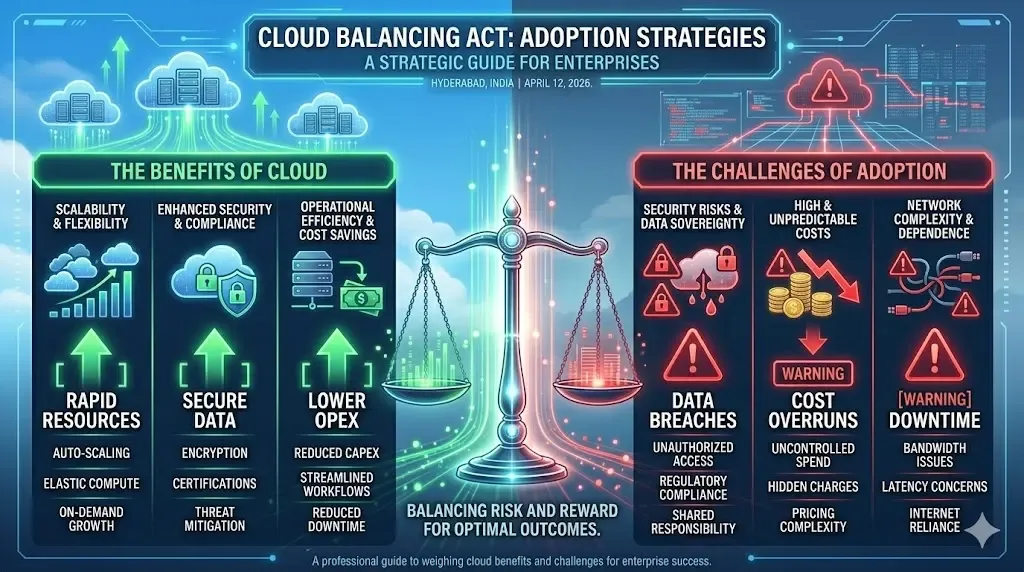
Cloud-based business applications run on remote servers accessed via internet, eliminating most on-premise hardware needs. They power CRM, ERP, collaboration tools, and custom SaaS—offering scalability for growing companies. In 2026, with hybrid work and AI demands rising, cloud apps deliver flexibility but come with hurdles like security and costs if unmanaged.
Key Benefits of Cloud Applications
Cloud apps transform operations through:
- Cost Savings: Pay-as-you-go model cuts upfront hardware costs by 30-50%; no maintenance overhead.
- Scalability: Auto-scale resources for traffic spikes, supporting 10x user growth without downtime.
- Accessibility: Access from any device/location, boosting remote team productivity by 20-40%.
- Automatic Updates: Providers handle patches/security, ensuring latest features without IT disruption.
- Collaboration: Real-time sharing across teams, reducing email chains and version conflicts.
- Disaster Recovery: Built-in backups minimize data loss risks compared to local servers.
These enable faster innovation, like AI analytics integrated seamlessly.
Common Challenges and Risks
Despite advantages, cloud adoption has pitfalls:
- Security Concerns: Data stored off-site raises breach risks; misconfigurations cause 80% of incidents.
- Vendor Lock-In: Switching providers becomes costly due to proprietary formats/data migration.
- Downtime Dependency: Internet outages or provider failures halt access (aim for 99.99% SLAs).
- Hidden Costs: Egress fees, over-provisioning inflate bills beyond initial savings.
- Compliance Issues: GDPR/HIPAA adherence requires extra config; audits add complexity.
- Performance Latency: Network delays slow apps vs. local systems in high-data scenarios.
Proactive planning mitigates most issues.
Cloud vs On-Premise Comparison (Text Format)
Cloud Applications:
- Cost: Low upfront, usage-based.
- Scalability: Instant, elastic.
- Maintenance: Provider-managed.
- Accessibility: Global, device-agnostic.
- Security: Shared responsibility model.
On-Premise:
- Cost: High upfront, predictable.
- Scalability: Manual hardware upgrades.
- Maintenance: In-house IT burden.
- Accessibility: Location/device limited.
- Security: Full control, but higher breach risk from unpatched systems.
Hybrid models blend best of both for 2026 enterprises.
How Starmeda Delivers Cloud Success
Starmeda Solutions Private Limited builds cloud-native apps via IT services (web/desktop/mobile + AI integration), sidestepping common pitfalls.
- Spark Venture Studio: Deploys 250 apps/games, 100 AI agents on scalable cloud for zero-downtime growth.
- Xenreach Ad Network: Cloud-hosted for high-traffic ad serving across ecosystems.
- Flowmeda Modular SaaS ERP: Cloud-based modules assemble in minutes—secure, compliant, auto-scaling.
- Full Stack Marketing: Cloud analytics track campaigns for optimized ROI.
We ensure secure migrations, cost audits, and Hyderabad-optimized cloud setups.
Overcoming Challenges: Actionable Tips
- Choose multi-cloud to avoid lock-in.
- Implement zero-trust security.
- Monitor usage with tools like AWS Cost Explorer.
- Start hybrid for legacy integration.
Cloud apps future-proof businesses when planned right.
