




How to Choose the Right Technology Stack for a New Product in 2026
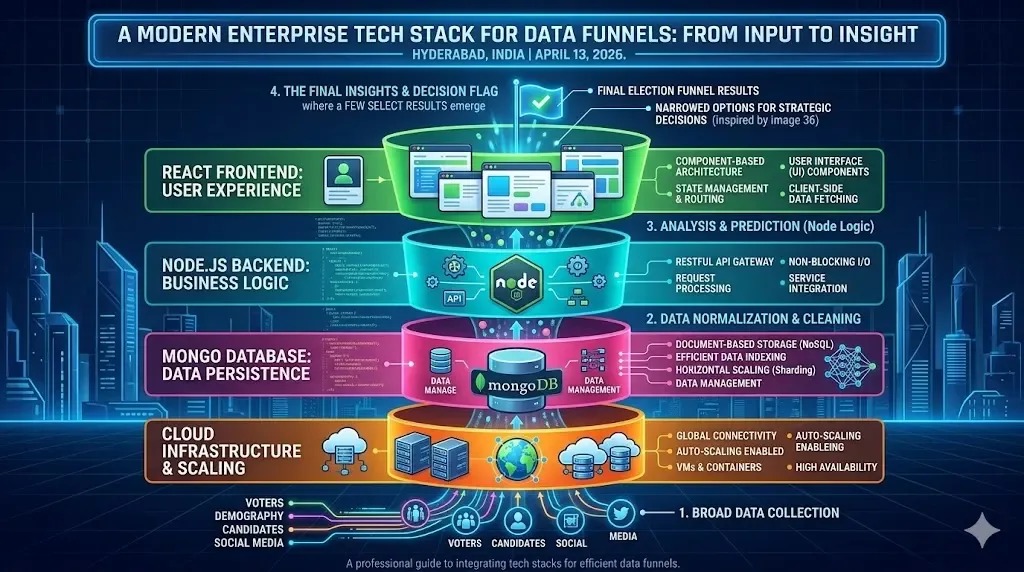
The technology stack—programming languages, frameworks, databases, servers, tools—forms the backbone of your product. Wrong choices lead to delays, high costs, and scalability issues; right ones accelerate launch and growth. In 2026, prioritize AI-ready, cloud-native stacks like MERN or Python/Django for versatility.
Follow these steps to select wisely.
Step 1: Define Product Requirements and Goals
Outline core features, target users, platforms (web/mobile), performance needs (latency <200ms), scalability (users/day), security (GDPR). Is it MVP or enterprise? Data-heavy? Real-time?
Match stack to needs: Node.js for real-time chat, React Native for cross-platform mobile.
Step 2: Assess Team Expertise and Hiring Pool
Choose familiar tech to speed development—learning curves add 20-50% time. Evaluate skills in JS, Python, Java. For Hyderabad, abundant React/Node talent.
Balance: Slightly new tech if community support strong (Stack Overflow, GitHub stars).
Step 3: Evaluate Scalability, Performance, and Cost
Ensure horizontal scaling (Kubernetes), efficient DB (PostgreSQL sharded). Test load early. Factor TCO: Open-source free upfront, but cloud bills scale.
Serverless (AWS Lambda) for variable loads saves 40%.
Step 4: Consider Ecosystem, Integration, Security
Rich ecosystem (npm for JS) means libraries/plugins. Easy APIs for third-party (Stripe, AWS). Security: Built-in auth (OAuth), compliance tools. Long-term: Active community, vendor support.
Step 5: Prototype, Test, and Iterate
Build PoC with 2-3 stacks. Benchmark speed/cost. Gather feedback. Audit every 6 months post-launch.
Popular 2026 Stacks Comparison (Text Format)
MERN (MongoDB, Express, React, Node):
- Best for: Web apps, real-time.
- Pros: JS full-stack, fast prototyping.
- Cons: MongoDB schema flexibility risks.
Python/Django + React:
- Best for: Data/AI products.
- Pros: Robust, secure, AI libs.
- Cons: Slower than Node.
MEAN (MongoDB, Express, Angular, Node):
- Best for: Enterprise SPAs.
- Pros: TypeScript safety.
- Cons: Steeper Angular curve.
Serverless (Next.js + Vercel + Supabase):
- Best for: Startups.
- Pros: Zero infra, auto-scale.
- Cons: Vendor lock.
How Starmeda Selects Winning Stacks
Starmeda Solutions uses data-driven stack choices for IT services (web/desktop/mobile + AI).
- Spark Venture Studio: MERN/Python for 250 apps/games, 100 AI agents—proven scalability.
- Xenreach: Node.js for ad traffic.
- Flowmeda ERP: Modular Django/React, cloud-ready.
We prototype stacks free, matching your product goals.
Final Tips
- Avoid hype; prioritize fit.
- Document rationale.
- Plan migration path.
Right stack = faster market, lower costs.
