




How to Plan a Custom Software Project the Right Way in 2026
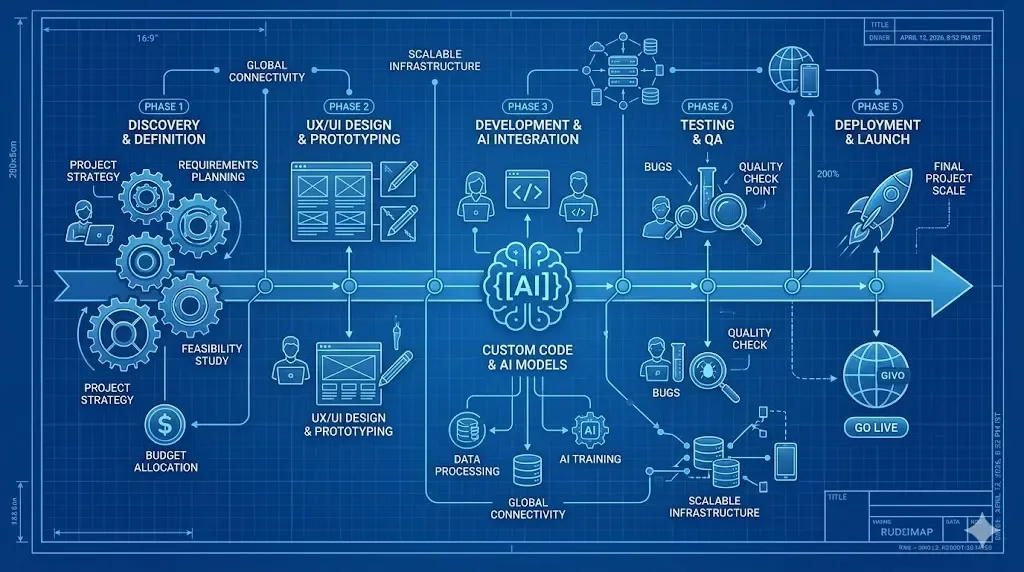
Planning a custom software project sets the foundation for success. Poor planning leads to delays, budget overruns, and features that miss the mark. Done right, it aligns tech with business goals, reduces risks, and delivers value faster. In 2026, with AI tools and agile methods standard, effective planning means using data-driven steps from day one.
Follow these proven steps to plan your project without common pitfalls.
Step 1: Define clear business goals and objectives
Start by asking: What problem does this software solve? How does it drive revenue, cut costs, or improve efficiency? Gather stakeholders—executives, end-users, IT leads—to align on priorities.
Document specific, measurable goals like "Reduce order processing time by 50%" or "Handle 10x user growth." Use tools like MoSCoW (Must-have, Should-have, Could-have, Won't-have) to prioritize. This prevents scope creep and keeps focus sharp.
Step 2: Gather and document detailed requirements
Conduct workshops, surveys, and interviews to capture needs. Break them into functional (user features) and non-functional (performance, security) requirements. Create user stories: "As a [user], I want [feature] so that [benefit]."
Include integrations, data sources, compliance (GDPR, HIPAA), and scalability needs. Tools like Jira or Confluence help organize this into a living document for the team.
Step 3: Assemble the right team and choose methodology
Pick a balanced team: developers, designers, QA, project manager, and domain experts. Decide on Agile (iterative sprints for flexibility), Waterfall (linear for fixed scopes), or hybrid.
For 2026 projects, factor in AI specialists for automation. In-house vs. outsourcing? Evaluate expertise, location (Hyderabad talent pools), and communication.
Step 4: Estimate timeline, budget, and resources accurately
Break the project into phases: discovery, design, development, testing, deployment. Use historical data or tools like Planning Poker for estimates. Add 20-30% buffer for risks.
Budget covers team salaries, tools, cloud costs, and maintenance (15-20% annually). Factor ROI: aim for payback in 6-12 months.
Step 5: Design architecture and tech stack
Outline system design: microservices for scalability, cloud (AWS/Azure) for flexibility. Choose languages (Python/Node.js), databases, and APIs. Prototype UI/UX with Figma for early feedback.
Plan security, data migration, and testing from here.
Step 6: Identify risks and create mitigation plans
List risks: tech debt, team turnover, scope changes, vendor delays. Score by impact/probability. Mitigate with backups like cross-training or milestone gates.
Step 7: Build a roadmap with milestones and reviews
Create a Gantt chart or sprint plan with deliverables: MVP in 8 weeks, full release in 4 months. Schedule demos every 2 weeks for feedback. Track with KPIs like velocity and burn-down charts.
Comparison of Planning Methodologies
- Agile: Best for changing requirements; iterative, flexible.
- Waterfall: Suited for fixed scopes; predictable but rigid.
- Hybrid: Balances both for enterprise projects.
Best Practices for Success
- Involve stakeholders weekly.
- Document everything for handover.
- Use CI/CD for faster iterations.
- Test early and often.
- Plan for post-launch support.
How Starmeda Makes Planning Effortless
Starmeda Solutions Private Limited excels in custom software planning through our IT services for web, desktop, and mobile development with AI integration.
- Spark Venture Studio: Proven planning for 250 apps, 250 games, 100 AI agents—market-researched roadmaps delivered on time.
- Xenreach Ad Network: Seamless API planning across ecosystems.
- Flowmeda Modular SaaS ERP: Plan and assemble in minutes, no complex builds.
- Full Stack Marketing: Integrates growth strategies from planning stage.
We handle discovery to deployment, ensuring Hyderabad businesses launch scalable solutions fast.
Final Checklist for Your Project Plan
- Goals defined and prioritized.
- Requirements documented.
- Team and stack selected.
- Budget/timeline realistic.
- Risks mitigated.
- Milestones scheduled.
Start planning today for tomorrow's wins!
