




Why Legacy Systems Slow Down Growing Companies in 2026
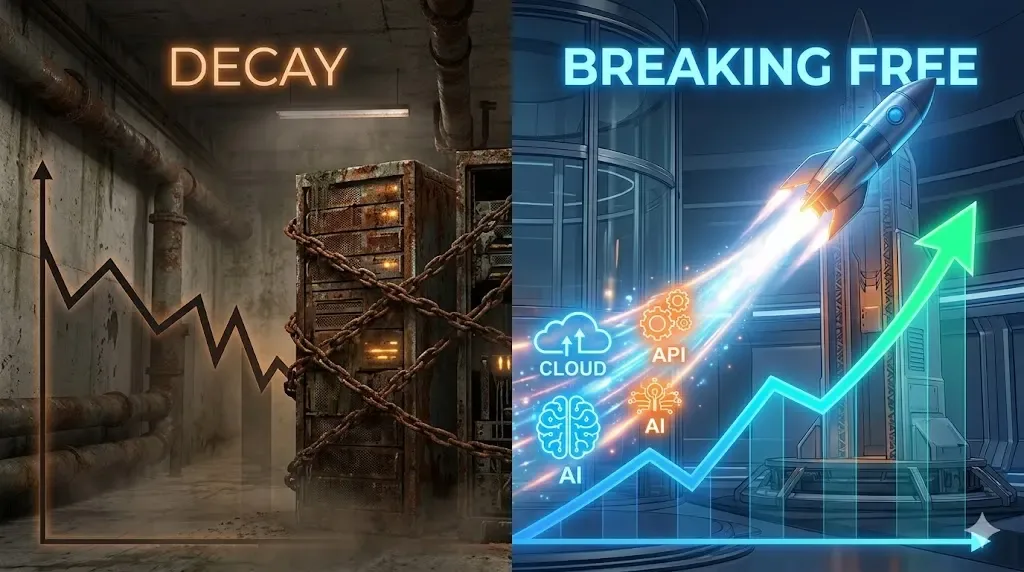
Growing companies often hit a wall because of legacy systems—old software and hardware from years ago that cannot keep up with modern needs. These systems cause slow processes, high costs, and missed opportunities, making it hard to scale, innovate, and stay competitive. In 2026, with AI, cloud computing, and real-time data becoming standard, sticking with outdated tech means falling behind fast.
Legacy systems started as reliable tools, but they become problems as businesses expand. They limit flexibility, create data silos, and demand constant fixes from rare experts. This drains resources and stops teams from focusing on growth.
Main problems with legacy systems
Legacy systems create several issues that hurt growing companies. Here are the key ones:
- Slow performance and crashes: Old code and hardware struggle with today's data volumes, causing delays and downtime that frustrate teams and customers.
- High maintenance costs: Finding specialists for obsolete tech is expensive, often costing 2-3 times more than modern alternatives.
- Poor scalability: They cannot handle more users or data, forcing businesses to buy new hardware or limit growth.
- Security risks: Without updates, they are easy targets for cyber attacks, leading to data breaches and compliance issues.
- No integration: Data stays trapped in silos, so sales, marketing, and support teams work with incomplete information.
- Limited innovation: Adding new features takes months, blocking quick responses to market changes.
- Bad user experience: Clunky interfaces slow employees and customers, reducing productivity and satisfaction.
These problems compound as the company grows, turning small issues into major roadblocks.
How legacy systems affect daily operations
In practice, legacy systems make simple tasks harder. For example:
Sales teams wait hours for reports because data cannot sync in real time.
Finance struggles with manual entry from disconnected systems.
Customer support lacks full history, leading to repeat issues.
IT spends days on fixes instead of building new tools.
This leads to lost productivity—studies show companies lose up to 65 hours per employee daily to system glitches. Growing firms need speed, but legacy tech forces slowdowns at every step.
Comparison of legacy vs modern systems
Modern systems solve these issues directly. Here's how they stack up:
- Performance: Legacy is slow and prone to crashes; modern handles high loads with auto-scaling.
- Cost: Legacy maintenance rises over time; modern lowers costs with cloud pay-as-you-go.
- Scalability: Legacy caps growth; modern expands seamlessly.
- Security: Legacy has gaps; modern includes built-in protections and updates.
- Integration: Legacy silos data; modern connects via APIs and microservices.
- Innovation speed: Legacy takes months for changes; modern deploys in days.
Switching to modern tech can cut costs by 25-35% and boost agility immediately.
The hidden cost to growth
Beyond operations, legacy systems hurt strategic goals. They delay new product launches, block market expansion, and make it hard to adopt AI or mobile tools. Competitors with modern stacks move faster, stealing market share. In Hyderabad's tech scene, companies ignoring legacy issues risk losing talent to innovative firms.
How Starmeda helps growing companies
Starmeda Solutions Private Limited specializes in modernizing operations through IT services for web, desktop, and mobile app development with AI integration. We help replace legacy burdens with scalable solutions.
- Spark Venture Studio: Our plan for 250 mobile apps, 250 games, and 100 AI agents uses modern cloud-native architecture—avoiding legacy traps entirely for rapid scaling.
- Xenreach Ad Network: Integrates smoothly across our app ecosystem, turning data into revenue without silos.
- Flowmeda Modular SaaS ERP: Build custom ERP from modules in minutes—no legacy overhauls needed, just pick what fits your growth stage.
- Full Stack Marketing: Pairs tech upgrades with campaigns to accelerate customer acquisition post-modernization.
Starmeda audits legacy systems, migrates data safely, and builds future-proof platforms, helping Hyderabad businesses grow 3-5x faster.
Steps to escape legacy systems
Start simple:
- Audit current systems for pain points.
- Prioritize high-impact migrations like CRM or ERP.
- Choose modular solutions for quick wins.
- Train teams on new tools.
- Monitor ROI with clear metrics.
Why act now in 2026
Delaying modernization increases risks and costs. Growing companies that modernize gain agility, cut expenses, and unlock innovation—positioning for AI-driven markets ahead.
