




Internal Workflow Portal for HR, Finance, and Admin Teams
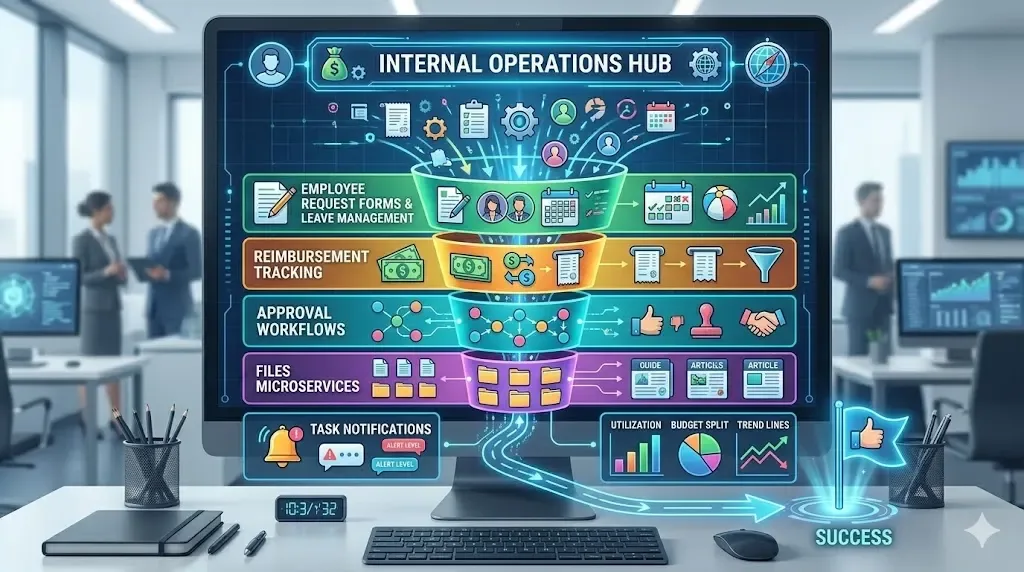
Internal teams often lose time when HR, finance, and administrative requests are handled through scattered emails, spreadsheets, paper forms, and manual follow-ups. An internal workflow portal gives employees and department teams a centralized place to submit requests, track approvals, access documents, and complete internal processes with greater speed and clarity.
For growing organizations, operational efficiency depends on how smoothly support functions work behind the scenes. A well-designed internal workflow portal helps standardize internal services, reduce repetitive coordination, improve accountability, and give employees a better experience when interacting with HR, finance, and admin teams.
Why Businesses Need an Internal Workflow Portal
As organizations expand, internal operations become more complex. HR handles onboarding, leave requests, policy workflows, and employee records. Finance manages reimbursements, payment approvals, expense claims, and budget workflows. Admin teams coordinate asset requests, facility issues, travel support, document handling, and day-to-day operational approvals.
When these processes are managed manually, delays become common, visibility drops, and departments spend too much time on coordination instead of execution. An internal workflow portal solves this by centralizing requests, approvals, handoffs, and status updates in one system that supports structured and repeatable business processes.
Core Features of an Internal Workflow Portal
A high-value internal portal should support both employee self-service and departmental workflow control. It should make internal operations easier for requesters while giving HR, finance, and admin teams the tools they need to manage processes at scale.
- Centralized request submission: Allow employees to submit HR, finance, and admin requests through structured digital forms.
- Approval workflow automation: Route requests automatically to the right managers, departments, or approvers based on request type and business rules.
- Status tracking and visibility: Let employees and teams monitor request progress, pending actions, approvals, and completion timelines.
- Employee self-service: Enable staff to access payslips, policy documents, leave details, reimbursement history, and internal support services in one portal.
- Document management: Store and manage forms, supporting files, policies, letters, invoices, and internal records in a structured format.
- Role-based access control: Ensure that employees, managers, HR personnel, finance teams, and admin users only access the data and workflows relevant to them.
- Notifications and reminders: Send automated alerts for pending approvals, missing documents, workflow updates, and deadlines.
- Workflow analytics and reporting: Measure request volumes, approval delays, turnaround times, bottlenecks, and department-level efficiency.
Business Benefits
An internal workflow portal improves operational efficiency by replacing fragmented manual coordination with standardized digital processes. This reduces processing time, lowers administrative overhead, and helps internal teams deliver services more consistently.
It also improves employee experience. Instead of chasing departments for updates, employees can submit requests, upload documents, and track progress through a single interface. That creates more transparency and reduces friction across routine internal interactions.
From a management perspective, the portal provides better control and visibility. Leaders can identify process bottlenecks, monitor service levels, ensure policy compliance, and improve internal operations using live workflow data and structured reporting.
How Starmeda Solutions Helps
Starmeda Solutions Private Limited helps organizations build custom internal workflow portals tailored to their HR, finance, and admin processes. Through its expertise in web, desktop, and mobile app development, Starmeda can create unified internal systems for employee requests, approvals, records, notifications, and department-level workflow management.
With AI integration, Starmeda can enhance these portals with intelligent request categorization, document validation, policy-based workflow suggestions, approval recommendations, predictive reminders, and internal support automation. This allows organizations to move beyond digitized forms and build smarter, more responsive internal operations.
For businesses that need modular flexibility, Starmeda’s Flowmeda modular SaaS ERP can support HR workflows, finance approvals, admin operations, employee records, expense management, reporting, and automation through configurable modules. This helps organizations start with essential workflows and expand the system as operational needs evolve.
Ideal Use Cases
- HR teams managing onboarding, leave approvals, employee requests, and document workflows.
- Finance departments handling reimbursements, approval chains, payment requests, and internal expense processes.
- Admin teams coordinating asset allocation, facility support, access requests, and operational tasks.
- Organizations aiming to improve employee self-service and reduce manual internal communication.
- Growing businesses looking for a centralized internal operations portal integrated with broader ERP functions.
Conclusion
An internal workflow portal for HR, finance, and admin teams helps organizations streamline internal operations, improve employee experience, and create more structured support processes across departments. With custom portal development, modular ERP capabilities, and AI-powered workflow enhancements, Starmeda Solutions can help businesses build a scalable internal operations platform designed for efficiency and growth.
